Cómo equipos de 1 a 1,000 usan Klart AI para trabajar como equipos de 10,000
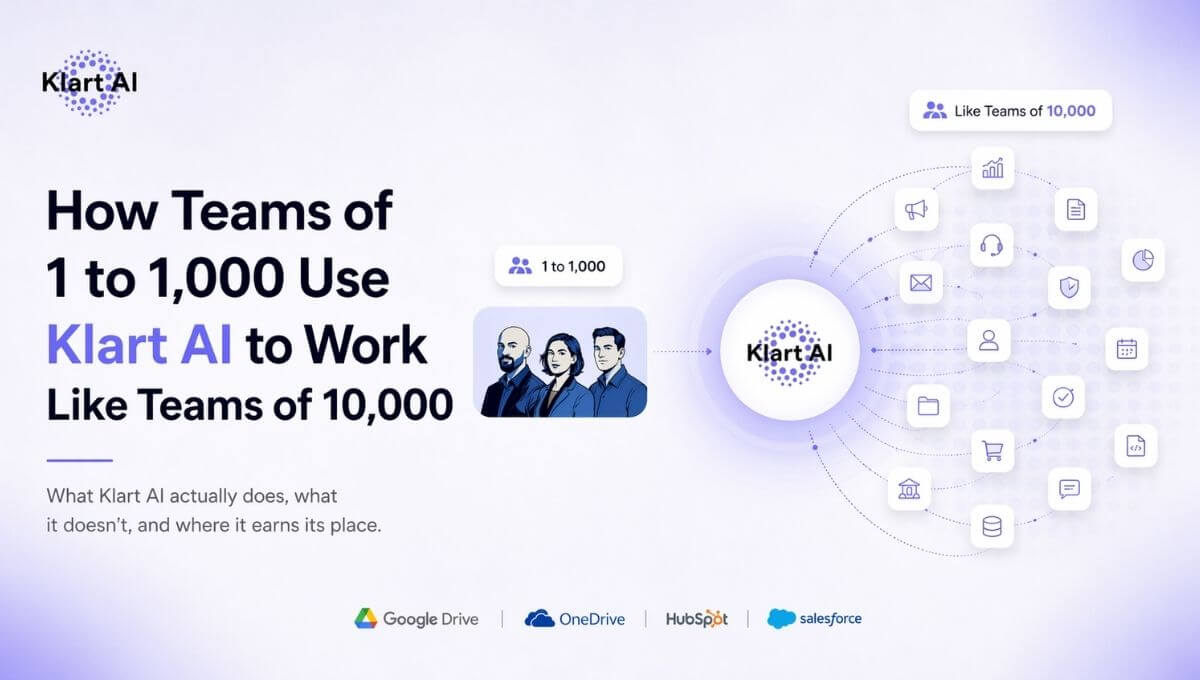
Klart AI se despliega en compañías desde emprendedores individuales hasta equipos de 1,000 personas. El patrón es el mismo: equipos pequeños necesitan apalancamiento de nivel empresarial sin complejidad empresarial. Esto es lo que realmente mueve la aguja a esa escala, y qué es teatro de marketing.
La mayoría de contenido "IA para pequeños negocios" está escrito por personas que nunca han implementado IA dentro de un pequeño negocio. El producto se vende como un botón mágico. El emprendedor se registra, pasa dos fines de semana intentando hacerlo funcionar, y silenciosamente se rinde.
Tenemos una perspectiva diferente, informada por observar 10,000+ usuarios realmente usando Klart. Muchos de ellos son de compañías menores a 1,000 personas.
El problema real de 1 a 1,000 empleados
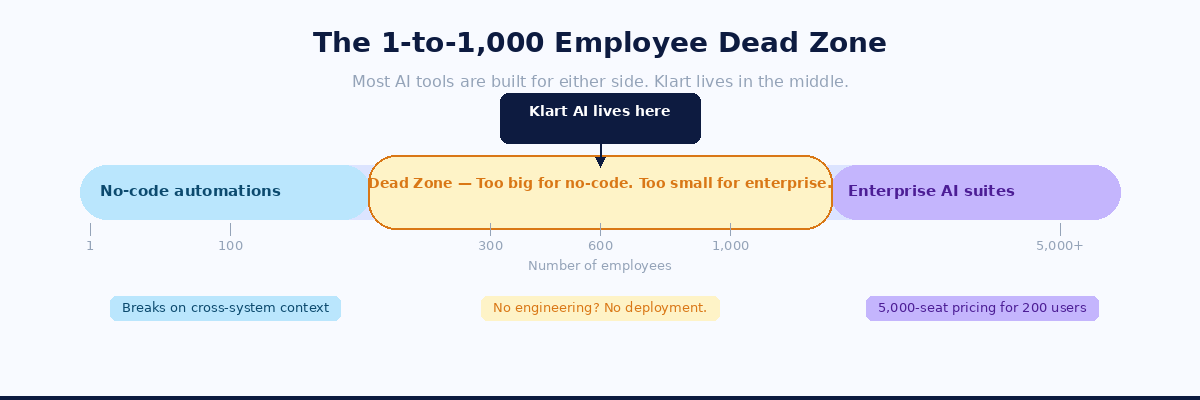
La zona muerta: donde las herramientas sin código se rompen y los conjuntos empresariales no escalan hacia abajo.
Los equipos en este rango comparten una verdad incómoda. Son demasiado grandes para automatizaciones sin código, que se rompen en el momento en que necesitas contexto entre sistemas. Y son demasiado pequeños para conjuntos de IA empresarial, que cobran precios por asiento suponiendo una implementación de 5,000 personas.
Esta es la zona muerta donde la mayoría de herramientas de IA caen. O lucen como un Zapier ligeramente más inteligente, u quieren que te comprometas a un proyecto de implementación de seis meses dirigido por un consultor Big 4. Los equipos pequeños y medianos no tienen seis meses. Tienen seis semanas antes de que termine el trimestre siguiente.
Lo que Klart AI realmente hace (y lo que no hace)
Klart AI es una plataforma de empleado de IA. No un chatbot. No otro asistente de IA que adivina respuestas basadas en conocimiento general.
Lo que hace:
- Recupera información verificada de tus herramientas conectadas, Slack, Google Drive, Notion, Salesforce, SharePoint, Confluence, y alrededor de 100 otras
- Ejecuta tareas reales de multi-paso a través de tu pila, no solo responde a indicaciones
- Opera con permisos, memoria persistente (Klart Brain), y citas trazables, cada respuesta incluye la URL fuente
Lo que no hace:
- Arreglar mágicamente procesos rotos. Si tus datos son un desastre, Klart lo expondrá más rápido, no lo limpiará por ti.
- Reemplazar juicio humano en decisiones legales, financieras, o de contratación. Expone las entradas; las personas aún deciden.
- Funcionar suavemente cuando nadie tiene autoridad para conectar sistemas internos. El bloqueador más grande siempre son los permisos, no la IA.
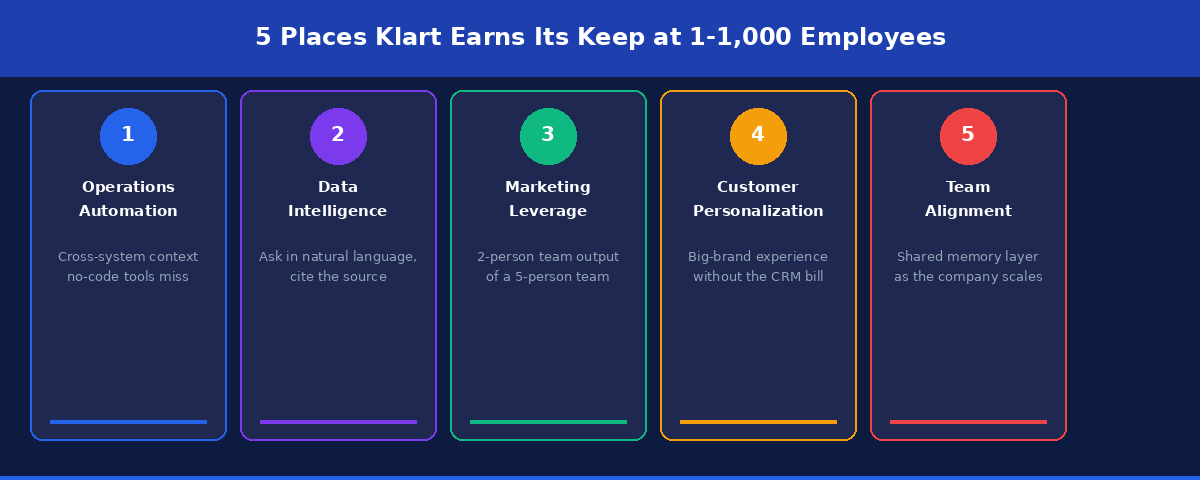
Cinco lugares donde Klart se gana su mantenimiento a esta escala
Los cinco patrones recurrentes a través de implementaciones de Klart a 1-1,000 empleados.
1. Automatización de operaciones que no se rompe
La mayoría de herramientas de automatización fallan porque no entienden contexto. Envían un correo sin saber que el cliente ya abrió un ticket de soporte. Klart ve ambos, porque lee tu base de conocimiento compartida y tu sistema de tickets al mismo tiempo.
En práctica: una agencia digital boutique automatizó informes de clientes y generación de propuestas, ahorrando 10-15 horas por semana en un equipo pequeño (datos de cliente Klart, 2025, NDA). Eso es aproximadamente un equivalente de tiempo completo de trabajo devuelto a horas de cliente facturables.
2. Datos que realmente se usan
Para la mayoría de empresas pequeñas, datos significa un panel que nadie abre. Klart cambia esto porque puedes preguntarle en lenguaje natural - en Slack - qué deseas saber. "¿Cuáles tres clientes están más cerca de irse este mes?" Respuesta en segundos, citando los datos fuente. Sin SQL. Sin ticket de BI.
3. Palanca de marketing sin un equipo completo
Una función de marketing de dos personas puede producir la salida de un equipo de cinco personas con Klart — no porque la IA sea mágica, sino porque absorbe el trabajo manual que solía requerir revisar un CRM y hacer referencia cruzada de una hoja de cálculo. Un cliente SaaS vio conversiones de prueba a pago subir 18% en tres meses después de integrar Klart en su flujo de trabajo de incorporación (datos de cliente Klart, 2025, NDA).
4. Trabajo con cliente que se siente personal
En B2C, la personalización a escala solía requerir una implementación de Salesforce. En B2B, solía requerir un ingeniero de ventas. Klart elimina ambas. Para un minorista regional, la predicción de demanda predictiva redujo el exceso de existencias en 30% (datos de cliente Klart, NDA), mejorando directamente el margen sin agregar cabezas.
5. Mantener equipos alineados mientras escalan
La etapa de 50 a 200 empleados es donde la mayoría de compañías pierden su coherencia temprana. Las herramientas se multiplican. El contexto se entierra. Klart actúa como la capa de memoria compartida — conectado a todo, citado en cada respuesta, accesible desde Slack, Teams, o la web.
Resultados de cliente reales
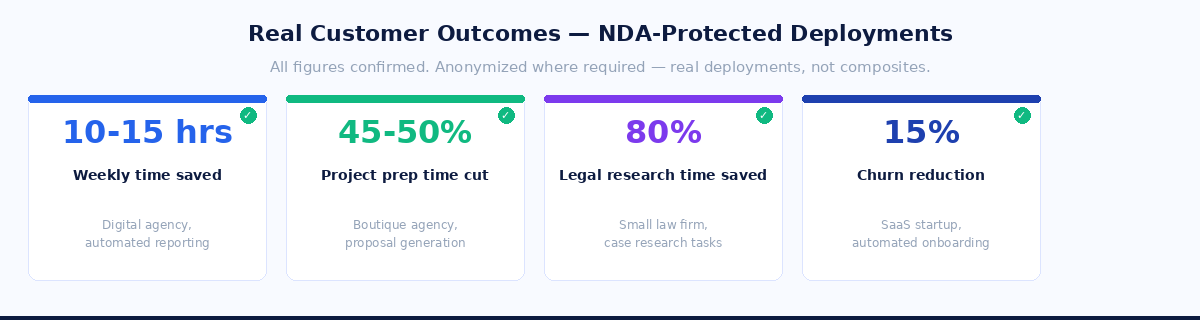
Las cuatro figuras confirmadas de implementaciones reales de cliente Klart. Anonimizadas bajo NDA.
Todos los clientes abajo están anonimizados donde NDA aplica. Estos son resultados reales, no composites.
- Una agencia digital boutique cortó el tiempo de preparación del proyecto en 45-50% automatizando informes de clientes y generación de propuestas (datos de cliente Klart, NDA).
- Una startup SaaS mejoró la conversión de prueba a pago en 18% en tres meses después de integrar Klart en su flujo de trabajo de incorporación (datos de cliente Klart, NDA).
- Un pequeño bufete de abogados cortó el tiempo de investigación legal en 80%, recuperando el equivalente de múltiples horas facturables por semana por asociado (datos de cliente Klart, NDA).
- Una startup SaaS redujo la pérdida de clientes en 15% a través de flujos de incorporación automatizados, liberando al equipo de éxito del cliente para trabajo de mayor valor (datos de cliente Klart, NDA).
¿Listo para ver si Klart encaja?
Si estás ejecutando un equipo entre 10 y 1,000 personas e intentando decidir si una plataforma de empleado de IA gana su lugar en tu pila, la respuesta más barata es intentarlo. Conecta tus herramientas, ejecútalo contra tus flujos de trabajo reales durante una semana, y ve dónde te sorprende.